Foundation settlement repair in Tyler usually costs $4,000–$15,000, at $1,200–$3,000 per pier. The number of piers should come from measured floor elevations, never from pictures of cracks. Clay shrinking in an East Texas drought is what creates the void a slab settles into.
How settlement is actually measured, why the dry season does the damage, and what the repair sequence looks like.
The measurement that settles the argument
Every foundation conversation in this town should start with the same document: a floor elevation survey. It reads height across the slab at a grid of points and reports the differences in inches, which converts a subjective impression (the house feels off, the doors stick) into data. A house that reads within a fraction of an inch across its span is not settling regardless of how dramatic the brick cracks look. A house that reads an inch and a half low at one corner has a defined problem with a defined scope, and the pier count follows arithmetic rather than salesmanship.
Why August is when Tyler houses drop
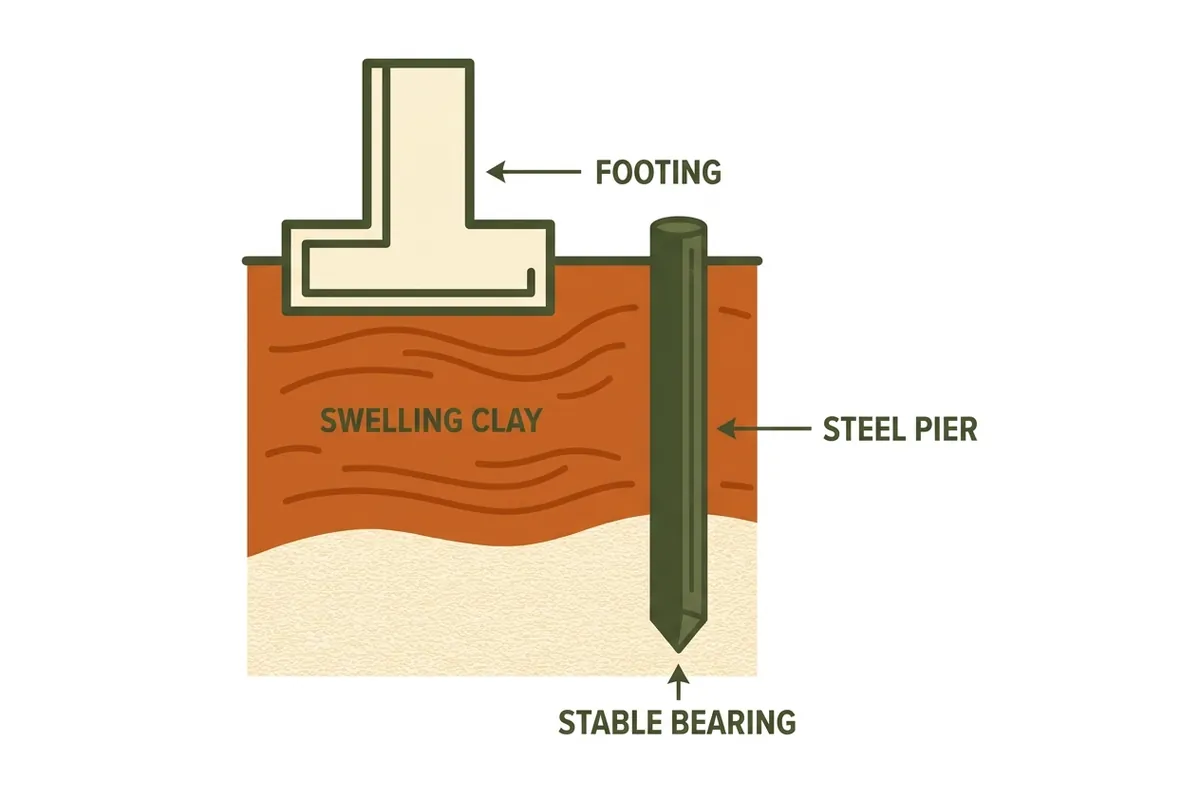
The wet half of the cycle mostly lifts and pushes. The dry half is what damages. When clay loses moisture it contracts and physically withdraws from the slab perimeter, leaving an unsupported edge. The concrete does the only thing it can do and follows. Then the rains return, the clay swells, and the soil pushes back up, but the house does not fully return, because it settled into a position while the support was gone. Each year the ratchet turns a little further, which is why settlement in East Texas is measured in seasons rather than events.
What the survey numbers usually mean
| Differential reading | Typical interpretation | Usual response |
|---|---|---|
| Under 1/2 inch across the span | Inside ordinary building tolerance | Fix drainage and keep watching |
| 1/2 to 1 inch, one area | Real but early movement | Drainage first, re-survey |
| 1 to 2 inches, defined zone | Established settlement | Piering that zone |
| Over 2 inches or accelerating | Advanced: finishes at risk | Prompt piering, possibly engineer |
| Localized dip with a wet spot | Suspect plumbing, not soil cycle | Static test before any repair |
The first year after the repair
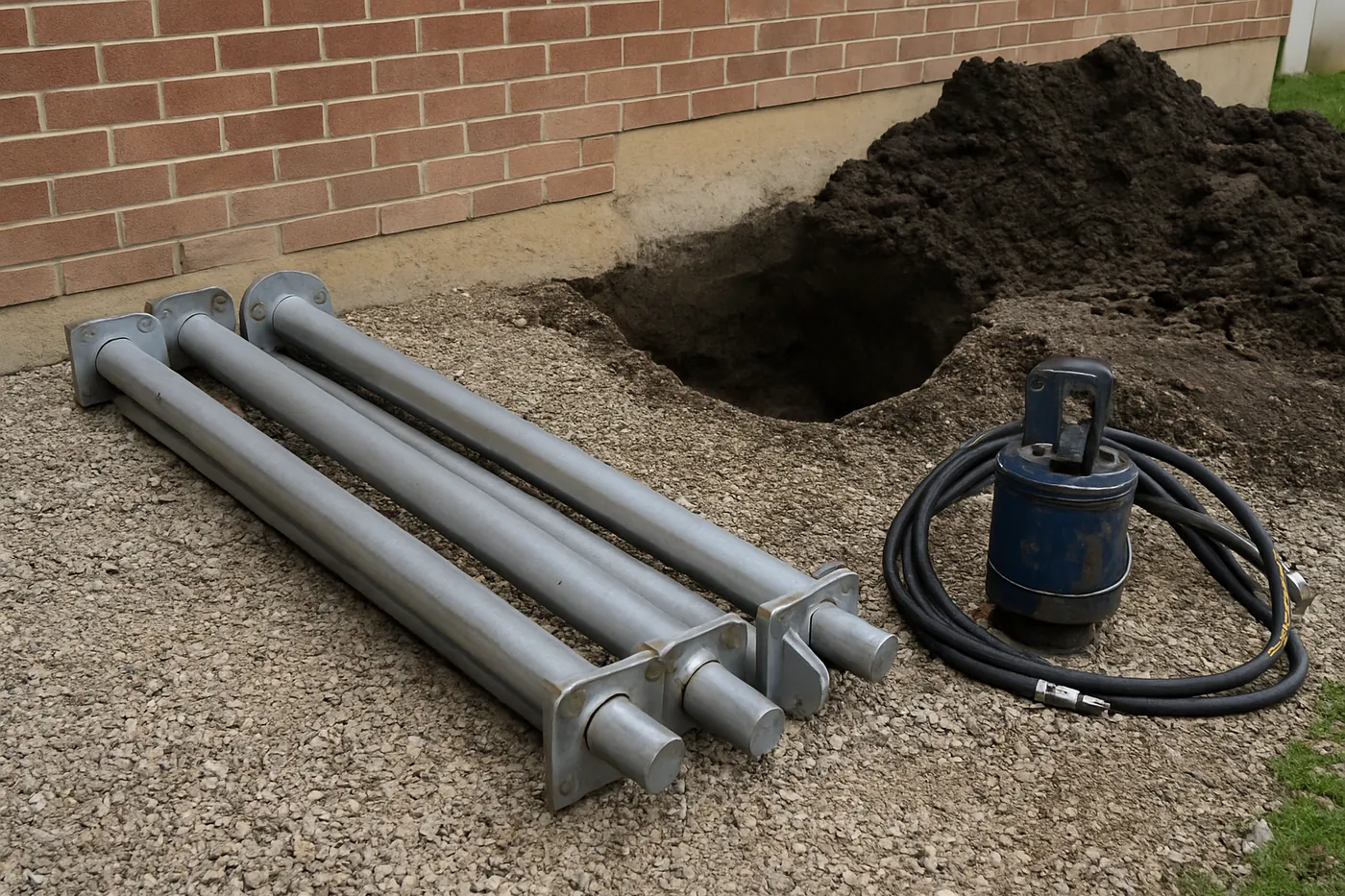
Piers end the settling, but the old damage stays until you fix it. Wait through one East Texas year, a rainy spring and a dry August, before repairing finishes, so drywall patching and brick repointing happen once. Fine cracks may open and close a little during that year, which is normal and does not mean the piers failed. Monitoring costs nothing: a dated photo and a pencil line across each crack answers whether anything moved in ten seconds.
Then keep the perimeter moisture steady through the drought months and the gutters discharging well away from the slab, because the sections nobody piered are still sitting on the same reactive clay. File the pier log with your house papers as well. A future buyer's inspector will spot the brackets either way, and whether they read as a warning or a plus depends on whether you can produce the records.
Settlement questions, straight answers
How do I know it's settlement and not just cracks?
Numbers. An elevation survey reads floor height across the whole slab and reports the difference in inches; settlement shows up as a measured drop in one area relative to the rest. Cracks are evidence, but they are ambiguous evidence - the survey is what turns 'the house looks off' into a diagnosis.
What does foundation settlement repair cost in Tyler?
A full repair here usually costs $4,000-$15,000, with each pier at $1,200-$3,000. How many piers depends on how much of the slab edge sank and by how much, and the elevation survey measures exactly that before any price is given.
Why does settlement happen here more than other places?
Because clay soil changes volume between wet and dry, and East Texas usually delivers both in a single year. Drought pulls the clay away from the slab perimeter; the concrete settles into the void; the next wet season swells the soil back but the house does not rise with it. Repeat annually and the drop accumulates.
Can settlement reverse on its own?
Partially, and it fools people. A wet spring can lift a house enough that cracks visibly narrow, which is why homeowners talk themselves out of calling. What is actually happening is the cycle continuing - and each dry season tends to take a little more than the wet one gave back.
Should I get an engineer?
Yes, if the diagnosis is disputed, a sale is involved, or the bids disagree; an independent structural engineer costs far less than the repair and gains nothing from the scope. Ask for floor elevations in numbers, a named cause, a specific fix with pier depth or capacity, and a professional stamp. A letter that only describes your cracks is paperwork, not an engineering opinion.
Get a Tyler foundation evaluation
Tell us what the house is doing (stair-step cracks in the brick, doors that stick every August, sloping floors, separating trim) so the evaluation starts from what you have seen. A local specialist who works in Tyler will call you back.